Solutions
Power on board, from yacht to workboat
For pleasure craft, inland shipping and workboats. We co-design the on-board system, supply premium-brand components and support installers and shipyards until the system is up and running.
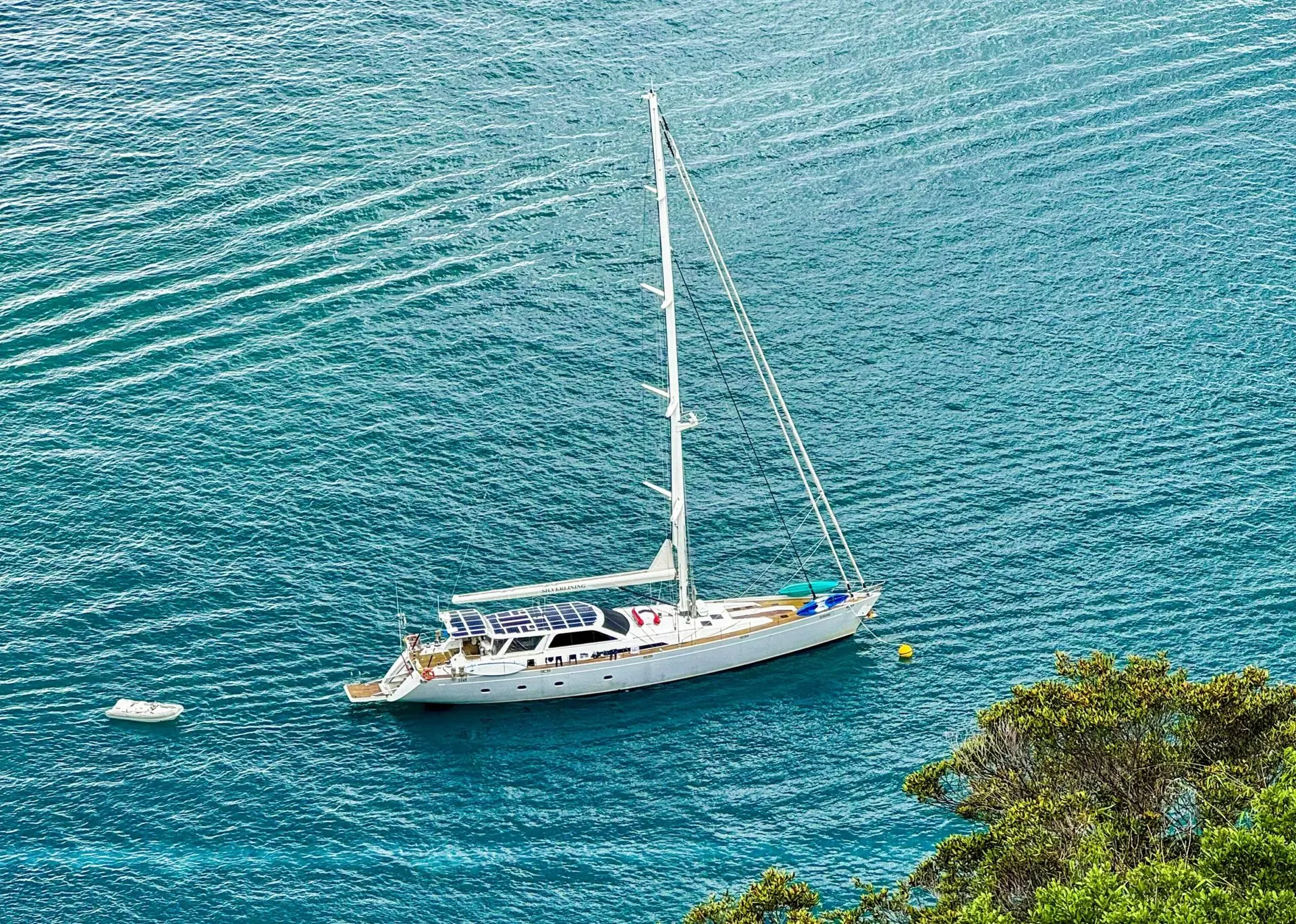
Energy on board
Power without a running generator
A boat is a small, self-contained grid: shore power is limited or unreliable, the generator costs fuel and peace and quiet, and space for panels is tight. We work with 12, 24 and 48 V systems, for new builds and refits.
Components
The building blocks of your on-board system
We only work with premium brands and match the components to each other. You get one bill of materials that adds up.
Inverter/charger
MultiPlus-II or Quattro: 230 V AC from the battery and charging from shore power or a generator. The Quattro has two AC inputs.
View invertersLithium battery
LiFePO₄ storage with more usable capacity, faster charging and less weight than lead-acid.
View batteriesCharging under way
The Orion XS charges the lithium battery from the alternator without overloading it. On shore power: waterproof Blue Smart IP67 chargers.
View DC-DC chargersSolar energy
One SmartSolar MPPT per panel group limits the effect of shade from mast and boom.
View charge controllersSafe shore power
An isolation transformer galvanically separates the shore connection from the on-board system, preventing galvanic corrosion of propeller and hull.
View isolation transformersMonitoring
The Cerbo GX shows all data on the multifunction display (MFD) at the helm, in the app and remotely via VRM.
View Cerbo GXApplications
From sailing yacht to workboat
Sailing yachts
From weekend trip to ocean crossing.
- Stil, zonder generator
- Zon en lithium als basis
Motor yachts
Galley, water heater and air conditioning on board.
- Walzekering springt niet
- Minder generatoruren
Inland shipping and houseboats
Living and working on board.
- Comfortabel 230 V-net
- Generator als reserve
Workboats
Reliable in continuous use.
- 24 of 48 V-boordnet
- Opvolging op afstand
Our role
Support for installers and shipyards
We do not install ourselves: that is your job. We take care of the design, the materials and the support.
Advies & studie
You present the vessel and its on-board consumption. We size the system and select the components.
System design
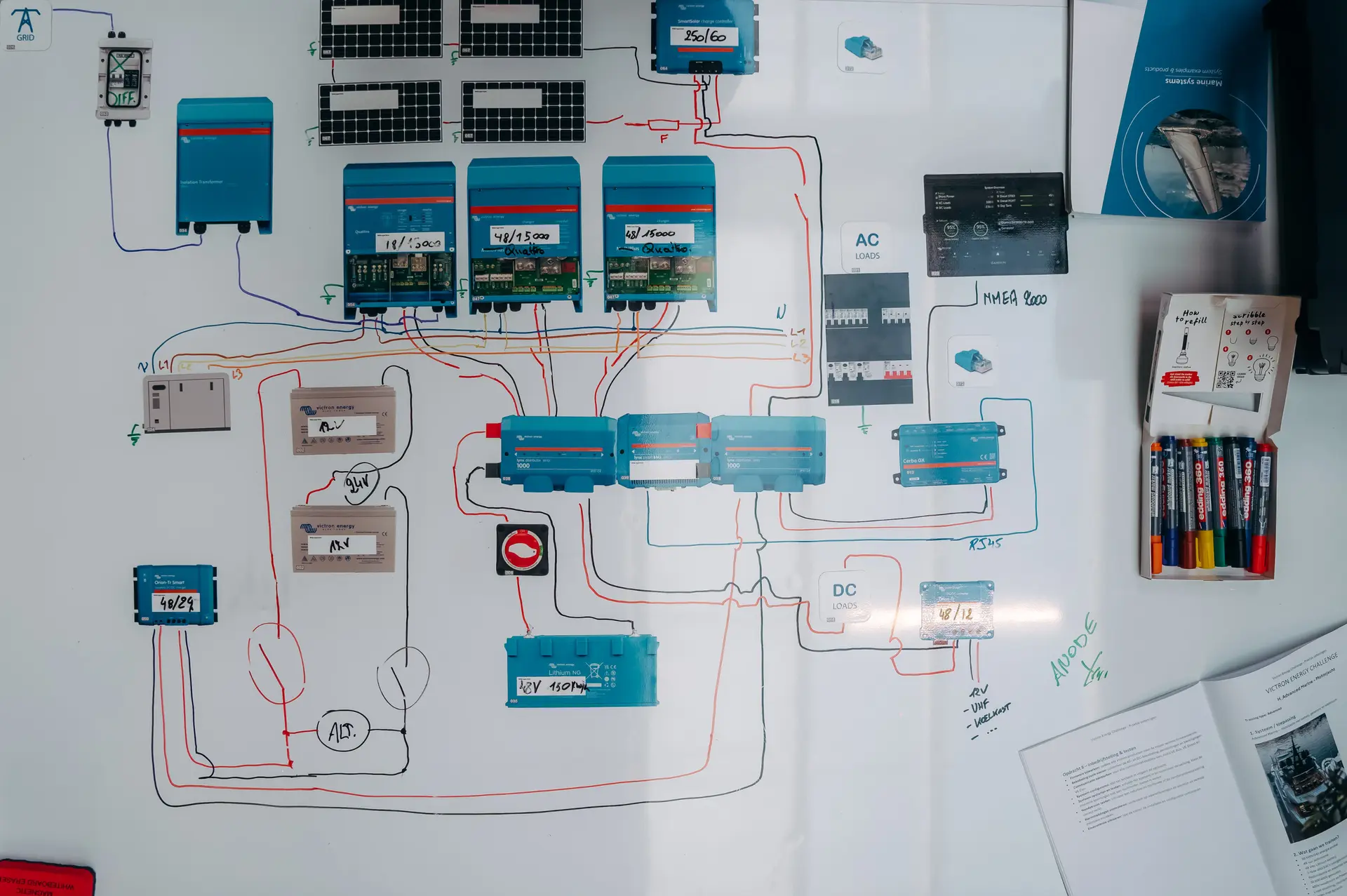
You receive a bill of materials, a quote and a diagram, prepared by our team.
Delivery
Premium brands only. Collect from our warehouse in Desteldonk or have it delivered anywhere in the EU.
Guidance
Support for complex and custom projects, with a dedicated point of contact.
Monitoring and mounting
Finishing touches on board
Sensors, mounting and extra charging sources that withstand moisture, salt and vibration.

Scanstrut
Waterproof cable seals and sturdy mounting for displays, charging points and control panels at the helm.
Superwind
Wind generators that keep charging in cloudy weather and at night, alongside solar.

Ruuvi sensors
Measure temperature and humidity in the bilge, cabin or battery compartment, so you spot condensation or overheating in time.
Frequently asked questions
Questions about on-board systems
Cannot find your question? Our team replies within 24 hours.
Ask your question12, 24 or 48 V: which voltage should I choose on board?
The higher the power, the higher the voltage: at 48 V the currents, and therefore the cable cross-sections, go down. Small boats often stay at 12 V; for large inverters and workboats we usually choose 24 or 48 V. We calculate it as part of the system design.
Can I combine lithium with the existing alternator?
Yes, with a DC-DC charger such as the Orion XS between the alternator and the lithium battery. It limits the charging current so the alternator is not overloaded.
How do I prevent galvanic corrosion through shore power?
With an isolation transformer between the shore connection and the on-board system. It galvanically separates the shore earth from the vessel's earth.
Can I monitor the system on the display at the helm?
Yes. A Cerbo GX shows the battery, inverter and chargers on compatible multifunction displays (MFD), and remotely via VRM.
Do you also install?
No. We advise, design and supply; the installer or shipyard does the installation. Boat owner? We'll put you in touch with an installer.
Contact
Discuss your on-board system
Send us your project details: type of vessel, consumers on board and what is installed today. Whether you're fitting out one yacht or building a workboat: our team replies to technical questions within 24 hours.
You do the installation. We make sure you are ready for it.